
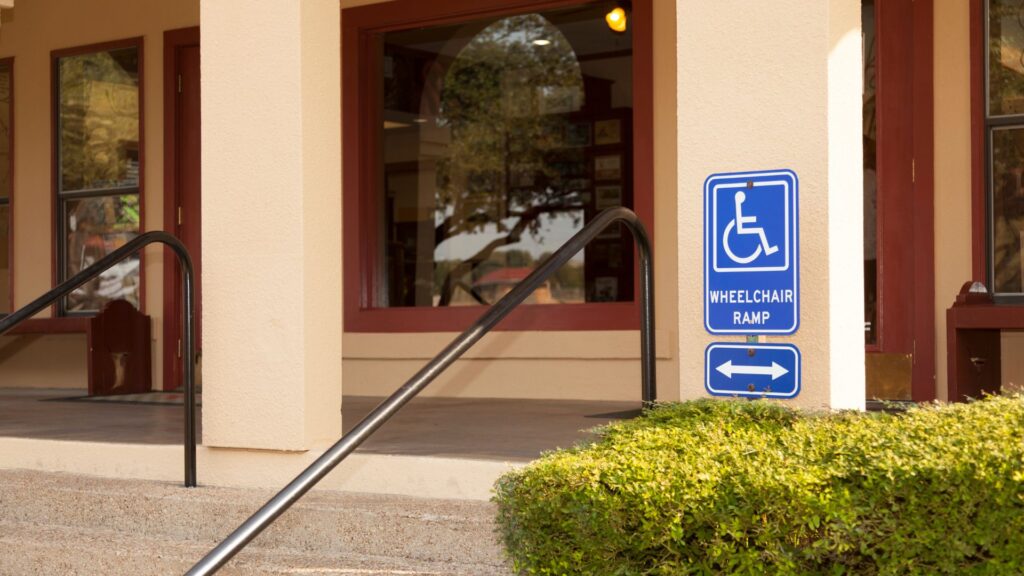
Compliance rarely begins at the point of design or construction. Instead, it is shaped much earlier by real estate decisions that determine how a space can be accessed, configured, and used. In regulated environments such as healthcare, these early choices carry long-term consequences, particularly in markets where dental office design must account for both accessibility and patient privacy from the outset.
The Genau Group advises healthcare and professional tenants across the DMV, including Loudoun County, VA, on commercial real estate decisions that intersect with regulatory requirements. Through strategic site selection, tenant representation, and lease negotiation, our team helps clients evaluate compliance feasibility before commitments are made. To learn more about our dental representation services, call (202) 735-5382 today!
Below, we discuss how your office real estate decision can affect HIPAA and ADA compliance:
1. ADA Compliance Starts With the Property
ADA compliance in design is established at the property level long before interior layouts are considered. At this stage, factors such as parking ratios, accessible parking placement, slope of exterior walkways, curb ramps, and proximity to public entrances set the baseline for accessibility. As a result, properties with steep grades, limited frontage, or shared access points often introduce compliance challenges that cannot be resolved through interior renovations alone.
For this reason, early evaluation of site conditions is critical to risk management. When accessibility limitations are identified during site selection, they can guide negotiations or eliminate unsuitable options. In turn, this approach reduces construction costs, limits regulatory exposure, and keeps compliance aligned with project timelines.
2. Interior Layout Constraints Shape ADA Design Outcomes
Beyond site access, interior ADA compliance depends heavily on a building’s underlying structure. Column spacing, corridor widths, restroom placement, ceiling heights, and elevator access all influence circulation paths and required clearances. In many older buildings, these fixed elements restrict flexibility and increase the complexity of achieving compliant layouts.
Accordingly, reviewing layout constraints before lease execution allows accessibility standards to guide space planning decisions. When feasibility is assessed early, designers can work within realistic parameters rather than revising plans midstream. This coordination supports both functional efficiency and regulatory compliance without introducing unnecessary redesign.
3. HIPAA Compliance Is Influenced by Spatial Configuration
While ADA addresses physical accessibility, HIPAA governs the protection of patient information, and real estate decisions affect both. Spatial configuration influences sound transmission, visual exposure, and movement patterns, all of which contribute to privacy risk. In many cases, these conditions are established before design solutions are even considered.
As a result, spatial planning plays a direct role in HIPAA compliance in areas such as:
- Reception layouts that expose patient conversations or records
- Sightlines from public areas into treatment or consultation rooms
- Acoustic separation between operatories and administrative spaces
- Staff circulation routes that intersect with patient waiting areas
When spaces lack sufficient depth or separation, the likelihood of incidental disclosure increases. Evaluating these factors early helps reduce privacy risk and supports compliant operations over time.
4. Dental Practices Face Heightened Compliance Complexity
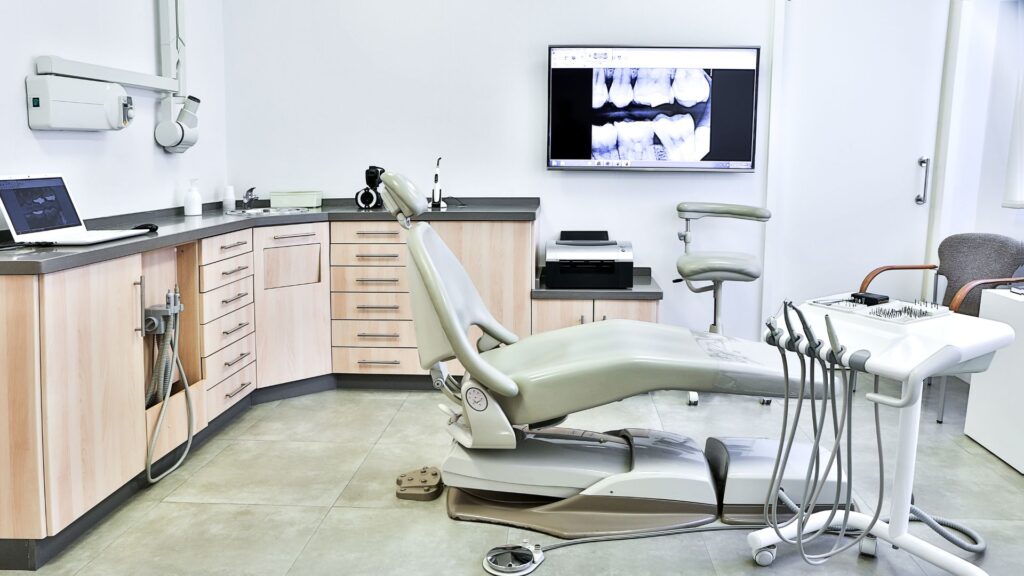
Dental practices operate within environments where accessibility, privacy, and clinical workflow intersect continuously. Operatories, sterilization areas, imaging rooms, waiting spaces, and staff zones must function together within limited square footage while meeting regulatory standards. In practice, office design often demonstrates how these requirements overlap with local building conditions and jurisdictional expectations.
Additionally, existing utilities, structural limitations, and zoning considerations further affect feasibility. By aligning clinical requirements with real estate constraints early in the process, design and construction efforts proceed with fewer disruptions. This coordination supports efficient workflows while maintaining compliance across both ADA and HIPAA considerations.
5. Lease Terms Can Enable or Restrict Compliance
In addition to physical space, the lease structure plays a significant role in compliance execution. Tenant improvement allowances influence the scope of modifications, while responsibility clauses determine who bears the cost of ADA upgrades. Approval rights over alterations also affect how efficiently compliance-related work can move forward.
At the same time, long-term flexibility remains essential. Expansion rights, modification provisions, and renewal options shape a tenant’s ability to adapt operations as regulatory requirements change. Through careful negotiation, commercial rental lease terms can support compliance throughout the occupancy period rather than limiting it after execution.
Dental Office Design in Loudoun County Guided by Compliance-Focused Real Estate Strategy
Addressing accessibility and privacy requirements during site selection and lease negotiation reduces redesign, cost escalation, and regulatory exposure. Through strategic advisory services and tenant representation, The Genau Group supports dental office design in Loudoun County by aligning real estate choices with regulatory requirements from the start. To learn more about our dental representation services, call (202) 735-5382 today!